Presented by

Hey guys,
I picked up 1,000 followers on X in a day last week. About 8.5% of my whole account, in 24 hours. Then another 2,000 the next day.
It’s a fun number. But in its own it’s worth close to nothing if I can do something meaningful with those followers.
That is why I always try to think through 1-2 places (at least) that I can funnel followers to across every medium. I want someone who finds me on LinkedIn to know I consult at danielberk.com. I want someone who finds me on X to know I host the Moneywise podcast. I want someone who finds me from Moneywise to know about the Hampton community. I want someone who finds me from my local media company in SC (Palmetto Parents) to know about my children’s storybook product I launched.
Everything connects to something else.
I did a consulting call this week with someone who’s been sitting on a newsletter idea for eight months. Smart operator, writes on LinkedIn already, knows exactly who they’re writing to. They haven’t sent anything. And most of our hour wasn’t about writing at all, it was about the plumbing, like what you set up before anyone subscribes, and what you do with attention once you have it.
That call is most of this issue.
If you're new here: I was beehiiv's first sales hire and built the GTM team that helped grow the company to over $30M ARR. I now host Moneywise (millions of podcast downloads), where I ask nine and ten figure founders questions most people are too polite to ask. I've built newsletters, podcasts, and local media companies from scratch, mostly at night, with two kids in the house (soon to be three!). I’ve built a lot of cool things, and now I help other people build cool things.
You don’t get to pick which post does the work.
Here’s my last month of X posting, ranked:
A post of a sushi photo and my X credit card thanking X for my date night, 14M impressions and 127k likes
A post about a transformer cutting down 3 trees at my house, 1M impressions and 7,900 likes
A video clip of a recent Moneywise podcast episode, 465k impressions and 2,900 likes
The thing I care about most finished last. That happens constantly and I’ve stopped being annoyed by it, but it also tells a story about how social media works. I go viral all the time for things that are directly meaningless for my bottom line. But the exposure helps everything else I care about get the attention it deserves.
My client told me their biggest deal last year came from a COO who had engaged with four of their fishing posts. Four. Never once touched any of the posts about the actual product, the ones written specifically for that buyer.
I lived the same thing at beehiiv. I closed six and seven figure deals where the prospect opened the call with some version of “I saw you on LinkedIn, you’re funny.” Nothing to do with email software. They’d just watched me be a person for a while and decided I wasn’t a stranger.
So when people ask me for a posting framework, I don’t really have one. I post 50 times a day some days. I don’t proofread. I write it, post it, log off, check back later. Something falls flat, fine. Something pops, great. People selling you a framework for it are mostly selling you a framework.
Create Your Own Custom Storybook
Today I launched a new product where you can create a custom storybook for your kids (and I promise they will love it).
It began the way most of my ideas do. I was looking for something for my boys that didn't exist. I wanted a book where they were actually in it: their face, their name, a story about something they're going through. We couldn't find one that did it well.
So I built it with my incredibly talented co-founder Mike.
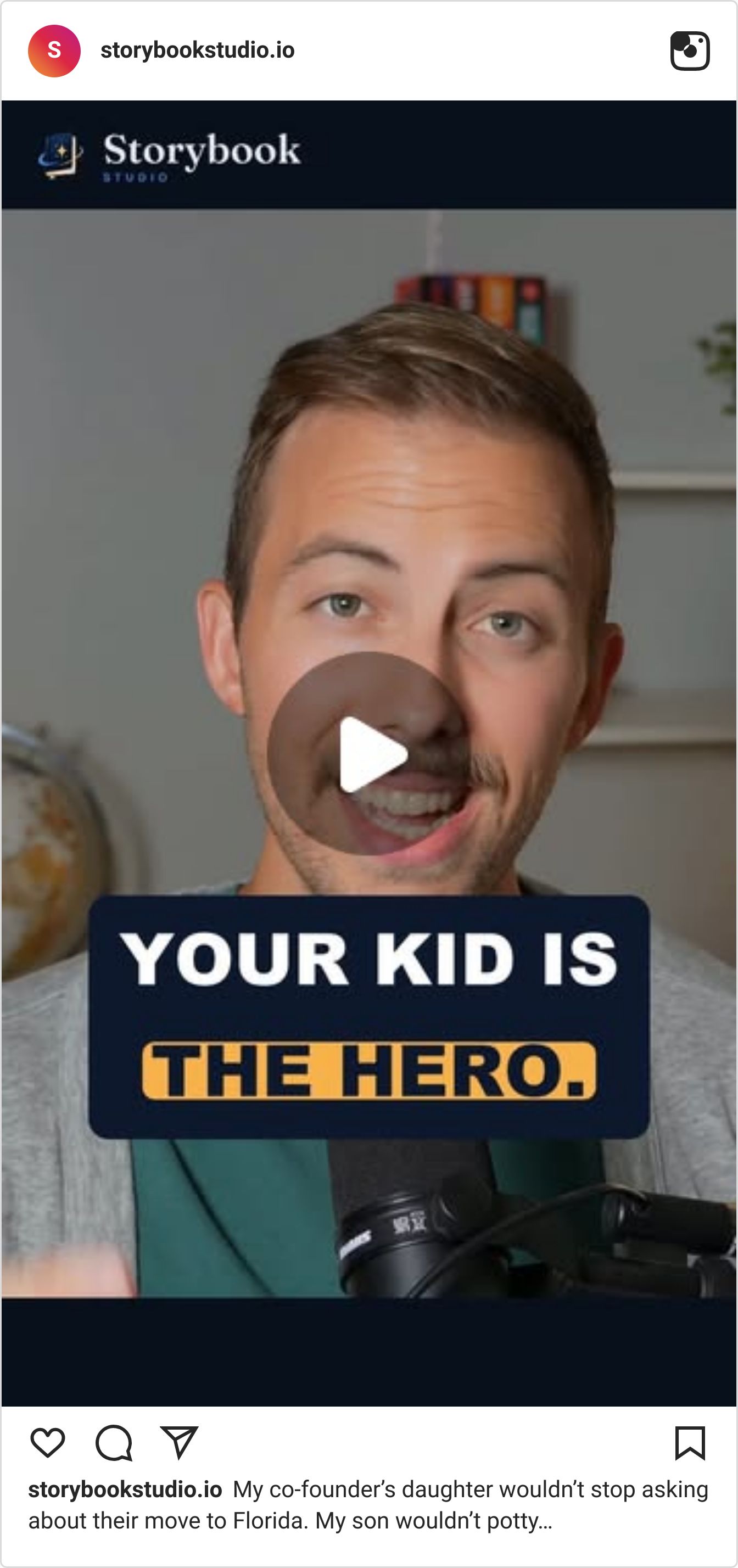
How it works:
Upload one real photo and tell us the idea. It can be a favorite memory, a big adventure, a new-sibling moment. We even made one to help Maverick potty train. He is the character in his own book and learning to use the potty! He loves it.
Watch the full book come together in minutes, with your kid as the hero
They'll recognize themselves, you, even your pets
Read the digital book right away, or have it printed and delivered for their bookshelf
Your kids won’t want to put it down.
See your kid as the hero of their own story, and tell us what breaks. We're two parents who made this ourselves, and we'd rather hear it from you now than find out later.
Rented reach vs. email list.
Ten thousand LinkedIn followers might get you 100 impressions on a post. The same 10,000 might get you 100,000 on the next one. You don’t control it and the rules change every quarter.
Ten thousand email addresses, you can reach 50 or 60% of them whenever you feel like it. New job, new product, new podcast, new anything… you’re never starting from zero again. That’s the whole reason to build an email list. You have so much more control over the distribution.
Which is what makes a spike useful. The narrow window where a bunch of strangers are looking at you and you have somewhere to put them. Always have somewhere else to drive traffic to. Think through what the flywheel should look like and point one thing to another to another to another. Make your system work for you.
The list you already have.
Best question from the call. My client has thousands of unique email addresses out of a decade of work correspondence. Real relationships, real conversations, just old. They wanted to know whether to import the whole thing and start sending.
Please don’t do that.
Half those inboxes don’t exist anymore. You’ll blast 7,000 addresses from a domain that’s never sent bulk mail, take a massive bounce rate, collect spam complaints from people trying to remember who you are, and torch the sending reputation of the newsletter you haven’t even started yet. Gmail decides who you are in the first few sends. Most platforms will suspend you before Gmail gets the chance.
Do it the other way around. Treat those 7,000 like a cold email campaign, because that’s what they are.
Buy a domain you’re willing to destroy. Something like yournamecoldemail.com. It costs a few dollars and its entire job is to absorb damage.
Warm it and send from there. Instantly is built for exactly this. Mailscale will spin up a pile of pre-warmed domains if you want to move faster. I’ve run this at tens of thousands of sends a month across 50+ domains. For 7,000 it’s a weekend.
Make the email a question, not a newsletter. You’re not sending them content. You’re saying here’s what I’m about to start writing, click if you want it. If they mark it spam, who cares. That’s the burner’s job.
Every click lands as a real opt-in. Maybe 500 subscribe. Maybe 2,000. Whoever shows up raised their hand, and your actual sending domain never touched the mess.
You end up with a smaller list and a clean one, which is the trade you want. I wrote a few weeks back about why small and correct beats big and vague.
Set this up before your first subscriber.
Every one of these is easier to do now than to retrofit later, and every one of them is about getting information back out of the people who join.
Survey them at signup. This is the one people skip and regret. The moment someone hands over their email they’re warm and they’ll answer questions. Name, industry, what they do, what brought them here. Try going back six months later and asking a cold list where they work, nobody replies. Do it while they’re hot. That data tells you who you’re actually writing to, and it’s the thing a sponsor asks for before they’ll pay you.
Ask a question in every issue that requires a reply. It can be unserious. On one newsletter I asked people what they wanted me to write about and got 2,500 responses, which turned into a content calendar I didn’t have to think about.
Run a poll. “Did this one land, yes or no,” with the open feedback box underneath.
Re-introduce yourself every single time. Three or four lines above the fold: who you are, what you’ve done, why you’re the person to read on this. You’re acquiring subscribers from a dozen places and most of them won’t remember signing up. Someone who joined yesterday and someone who joined in March should both get the context.
Hold the referral program. Everyone bolts one on in week two. Your first several asks should all be about them: tell me about yourself, reply to this, vote on that. Ask for their friends once you’ve earned it.
And spend almost no time on design. Look at the newsletters that actually work. Sahil Bloom, Justin Welsh, Ryan Holiday, etc. White background, black text, a couple of dividers, a signature at the bottom. The writing carries it. If you spend three weeks on your template and don’t send anything, the template is not your problem.
I know about some incredibly designed newsletters too (Tyler Denk’s Big Desk Energy, for example). But a beautiful design paired with no emails sent means nothing. Focus on the content and iterate on the design over time.
I’ve helped a few hundred people start a newsletter (some of them even got acquired for large amounts of money). The ones who never launch almost never fail on the writing. They stall picking a name, or a template, or waiting until they’re sure they have enough to say for a whole year.
Send something ugly this week.
Writing is just sales anyway. You’re doing discovery — what does this person need, can I actually help, and if not do I know who can. You’re a deal maker in the inbox.
Until next time,
Daniel
P.S. If you’re sitting on a list of old contacts and you’re not sure how to reactivate it without burning yourself down, reply and tell me how many addresses you’ve got and how old they are. I’ll tell you if it’s worth the trouble. If you want to go deeper on the whole setup, grab a consulting call.
It should come as no surprise that I am a big fan of beehiiv, so if you already know you want to start and you want to get a partner discount, use my link and I’ll hook you up.
